HPE Network Security Expert
Here you have the best HP HPE7-A10 practice exam questions
- Preview the first 5 of 74 questions for free
- These questions were last updated on August 8, 2026
- This site is not affiliated with or endorsed by HP.
The gateway has these aliases defined:
- host1 = 10.0.6.8
- net1 = 10.0.0.0 255.255.252.0
- net2 = 10.0.3.0 255.255.255.0
- net3 = 10.0.0.0 255.255.248.0
- net4 = 10.0.0.0 255.255.0.0
The client sends two packets:
- 1: tcp 8086 to 10.0.3.75
- 2: https to 10.0.7.24
What happens?
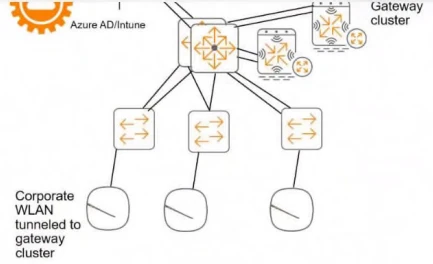
This equipment will connect to an SSID named "Factory." If the equipment passes authentication and receives custom Device Category "Manufacturing," it should receive this AOS user role: "equipment." That role and a "profiling" role for unprofiled devices are already configured on the AOS devices.
The users responsible for configuring PSKs on the equipment belong to the "FactoryAdmins" group in the company's Active Directory domain. CPPM has an authentication source for that domain named MyAD. As part of the solution, you have created these services on CPPM:
- Service 1:
- Type: Application
- Authentication source: MyAD
- Authorization source: None
- Enforcement policy:
- Rule 1 condition: Authorization:Endpoints Repository:Category EQUALS Manufacturing
- Rule 1 profile list: Enforcement profiles that permit application access and assign the Guest Operators role
- Default action: Deny access
- Service 2
- Type: Wireless with mPSK
- Authentication source: Guest Devices Repository
- Authorization source: None
- Enforcement policy:
- Rule 1 condition: Endpoint Device Insight Tag EQUALS Manufacturing
- Rule 1 profile list: Enforcement profile that assigns Aruba-User-Role = equipment and [Registered Device MPSK] profile
- Rule 2 condition: Endpoint:Device Insight Tag NOT_EXISTS
- Rule 2 profile list: Enforcement profile that assigns Aruba-User-Role = profiling and [Registered Device MPSK] profile
- Default action: Deny access
What is an error in this configuration?
You are helping a company add HPE Aruba Networking ClearPass to their network, which uses HPE Aruba Networking network infrastructure devices.
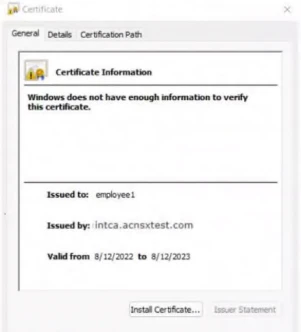
The company currently has a Windows domain and Windows CA. The Window CA issues certificates to domain computers, domain users, and servers such as domain controllers. An example of a certificate issued by the Windows CA is shown here.
# ClearPass cluster IP addressing and hostnames
A customer's ClearPass cluster has these IP addresses:
• Publisher = 10.47.47.5
• Subscriber 1 = 10.47.47.6
• Subscriber 2 = 10.47.47.7
• Virtual IP with Subscriber 1 and Subscriber 2 = 10.47.47.8
The customer's DNS server has these entries
• cp.acnsxtest.com = 10.47.47.5
• cps1.acnsxtest.com = 10.47.47.6
• cps2.acnsxtest.com = 10.47.47.7
• radius.acnsxtest.com = 10.47.47.8
• onboard.acnsxtest.com = 10.47.47.8
Refer to the scenario.
You have imported the root certificate for the Windows CA to the ClearPass CA Trust list. Which usages should you add to it based on the scenario requirements?
You are helping a company add HPE Aruba Networking ClearPass to their network, which uses HPE Aruba Networking network infrastructure devices.
The company currently has a Windows domain and Windows CA. The Window CA issues certificates to domain computers, domain users, and servers such as domain controllers. An example of a certificate issued by the Windows CA is shown here.


# ClearPass cluster IP addressing and hostnames
A customer's ClearPass cluster has these IP addresses:
• Publisher = 10.47.47.5
• Subscriber 1 = 10.47.47.6
• Subscriber 2 = 10.47.47.7
• Virtual IP with Subscriber 1 and Subscriber 2 = 10.47.47.8
The customer's DNS server has these entries
• cp.acnsxtest.com = 10.47.47.5
• cps1.acnsxtest.com = 10.47.47.6
• cps2.acnsxtest.com = 10.47.47.7
• radius.acnsxtest.com = 10.47.47.8
• onboard.acnsxtest.com = 10.47.47.8
Refer to the scenario.
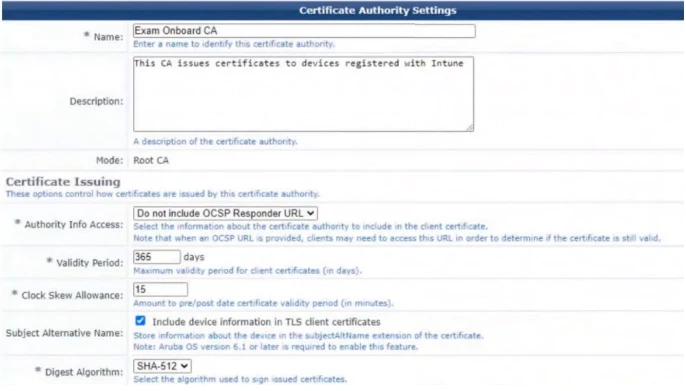
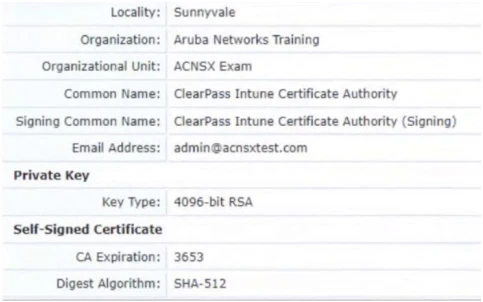
You have started to create a CA to meet the customer's requirements for issuing certificates to mobile clients, as shown in the exhibit below.


What change will help to meet those requirements and the requirements for authenticating clients?
You are helping a company add HPE Aruba Networking ClearPass to their network, which uses HPE Aruba Networking network infrastructure devices.
The company currently has a Windows domain and Windows CA. The Window CA issues certificates to domain computers, domain users, and servers such as domain controllers. An example of a certificate issued by the Windows CA is shown here.


# ClearPass cluster IP addressing and hostnames
A customer's ClearPass cluster has these IP addresses:
• Publisher = 10.47.47.5
• Subscriber 1 = 10.47.47.6
• Subscriber 2 = 10.47.47.7
• Virtual IP with Subscriber 1 and Subscriber 2 = 10.47.47.8
The customer's DNS server has these entries
• cp.acnsxtest.com = 10.47.47.5
• cps1.acnsxtest.com = 10.47.47.6
• cps2.acnsxtest.com = 10.47.47.7
• radius.acnsxtest.com = 10.47.47.8
• onboard.acnsxtest.com = 10.47.47.8
Refer to the scenario.
Assume that you have set up CPPM to assign HPE Aruba Networking ClearPass roles and AOS user roles as indicated in the scenario. However, a penetration tester was able to access the network with medical staff privileges on a client with a valid computer certificate but revoked medical user certificate. In this circumstance, the customer wants the client to receive computer-only access.
What can you do to correct this issue while still meeting the other customer requirements?

69 more questions await
Unlock the full HP HPE7-A10 question bank
Choose your plan
Single payment · No subscription · No hidden fees
Standard
Quick preparation
30 days access
Premium
Guaranteed success
90 days access
Printable PDF download
NewSave every question as a PDF for offline study or printing.
100% Money Back Guarantee
Don't pass? Full refund.
Based on 9,848+ reviews
Trusted by thousands of professionals
Join certified professionals who passed their exams with Examice
Examice helped me pass my AWS certification on the first try! The questions were incredibly similar to the real exam. Comments helped me understand answers I was struggling with.
Great results in a short prep time. Passed on my first attempt.
I needed to pass an exam for work, and this website delivered. The quality for the price is outstanding, and the support is really good. I passed without issues.
Skeptical at first, but impressed. Every question included clear, detailed explanations.
The guarantee gave me confidence to invest in the premium package. Turns out I didn't need it. Passed comfortably. The explanations for each answer were incredibly detailed and helped me grasp security concepts that I'd been struggling with for months.
Used Examice for my PMP certification. The questions were well structured and covered all exam domains thoroughly.
After failing my first attempt with other study materials, I switched to Examice and passed confidently on my second attempt.
The premium package was worth it. 90 days of access gave me the flexibility to study when it worked for me, without feeling rushed.
Straightforward questions that matched the real exam perfectly. Studied for two weeks and passed with a great score.
Frequently Asked Questions
Everything you need to know. Contact us for more.
Our HP HPE7-A10 questions are based on real exam experiences and are continuously updated to match the current exam format. Most candidates who study with us report passing on their first attempt, based on a self reported post exam survey.
With our Premium package, you get a 100% money back guarantee. If you don't pass your exam after studying with our materials, simply contact us with your exam results and we'll refund your purchase. Terms and conditions apply, read our full refund policy to learn more.
Our question bank is updated regularly based on feedback from recent exam takers. We typically review and update our content every week with reports about new questions or changes to the exam format.
Yes. When your access is close to expiring, you can renew it for another 30 days directly from the exam page. If you need more time while you are still preparing, reach out and we will help.
This is a single payment with no recurring charges. Once you purchase, you get full access to all exam questions for the duration of your package (30 days for Standard, 90 days for Premium). No hidden fees or automatic renewals.
Pass on your first try
All 74questions · Detailed explanations · Printable PDF · 90 days access
single payment