The greatest increase in population growth rate between 1950 and 2000 occurred in
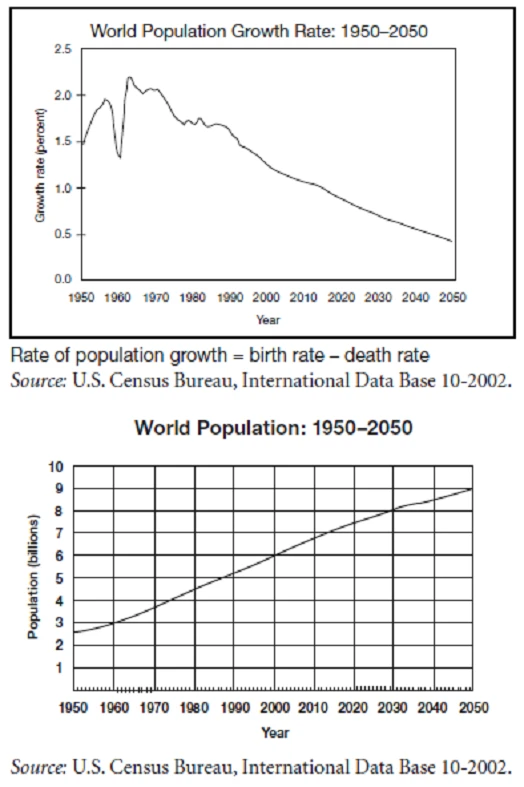
The greatest increase in population growth rate between 1950 and 2000 occurred in
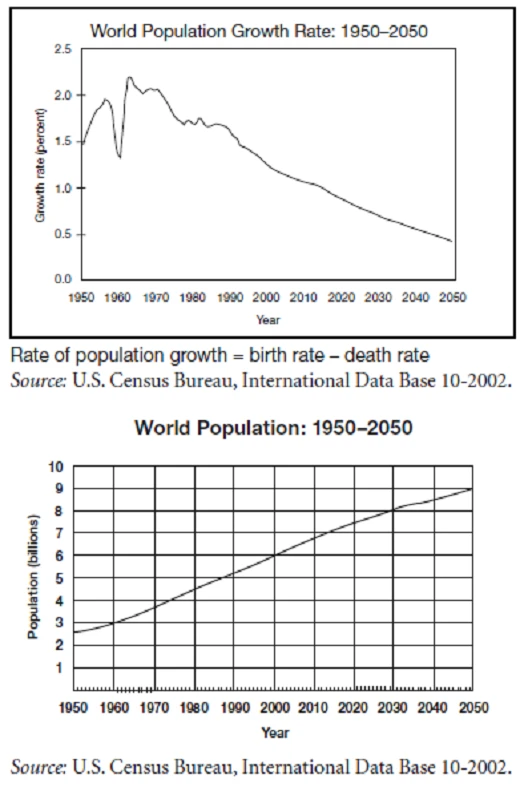
The world population growth rate dropped one percentage point between the mid-1950s and 1960.Which of the following best explains this occurrence?
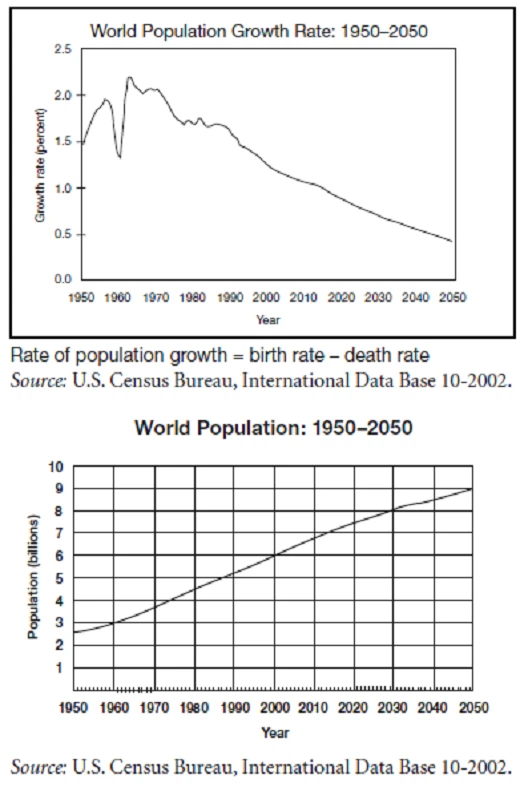
Which of the following statements is proved by the information in the two graphs?
Even though acid rain looks, feels, and even tastes like clean rainwater, it contains high levels of pollutants. Scientists believe car exhaust and smoke from factories and power plants are the main causes of acid rain, but natural sources like gases from forest fires and volcanoes may also contribute to the problem.
Pollutants mix in the atmosphere to form fine particles that can be carried long distances by wind. Eventually, they return to the ground in the form of rain, snow, fog, or other precipitation. Acid rain damages trees and causes the acidification of lakes and streams, contaminating drinking water and damaging aquatic life. It erodes buildings, paint, and monuments. It can also affect human health. Although acid rain does not directly harm people, high levels of the fine particles in acid rain are linked to increased risk for asthma and bronchitis. Since the 1950s, the increase of acid rain has become a problem in the northeastern United States,
Canada, and western Europe.
Which of the following natural resources is least likely to be affected by acid rain?
Even though acid rain looks, feels, and even tastes like clean rainwater, it contains high levels of pollutants. Scientists believe car exhaust and smoke from factories and power plants are the main causes of acid rain, but natural sources like gases from forest fires and volcanoes may also contribute to the problem.
Pollutants mix in the atmosphere to form fine particles that can be carried long distances by wind. Eventually, they return to the ground in the form of rain, snow, fog, or other precipitation. Acid rain damages trees and causes the acidification of lakes and streams, contaminating drinking water and damaging aquatic life. It erodes buildings, paint, and monuments. It can also affect human health. Although acid rain does not directly harm people, high levels of the fine particles in acid rain are linked to increased risk for asthma and bronchitis. Since the 1950s, the increase of acid rain has become a problem in the northeastern United States,
Canada, and western Europe.
Which of the following is NOT a cause of acid rain?