Question 6 of 80

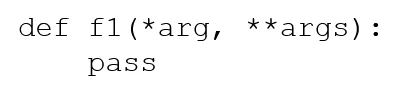
Analyze the following snippet and select the statement that best describes it.
Exam PCPP-32-101: Question 6 - Image 1
Answer

Suggested Answer

The suggested answer is A.

The code snippet defines a function f1 that accepts any number of positional and keyword arguments. The *arg parameter collects all positional arguments into a tuple named arg, and the **args parameter collects all keyword arguments into a dictionary named args. The naming of these parameters does not have to follow specific conventions like args and kwargs; hence, the code is syntactically correct despite non-standard naming.

Community Votes16 votes
ASuggested
50%
B
38%
C
13%
Question 7 of 80

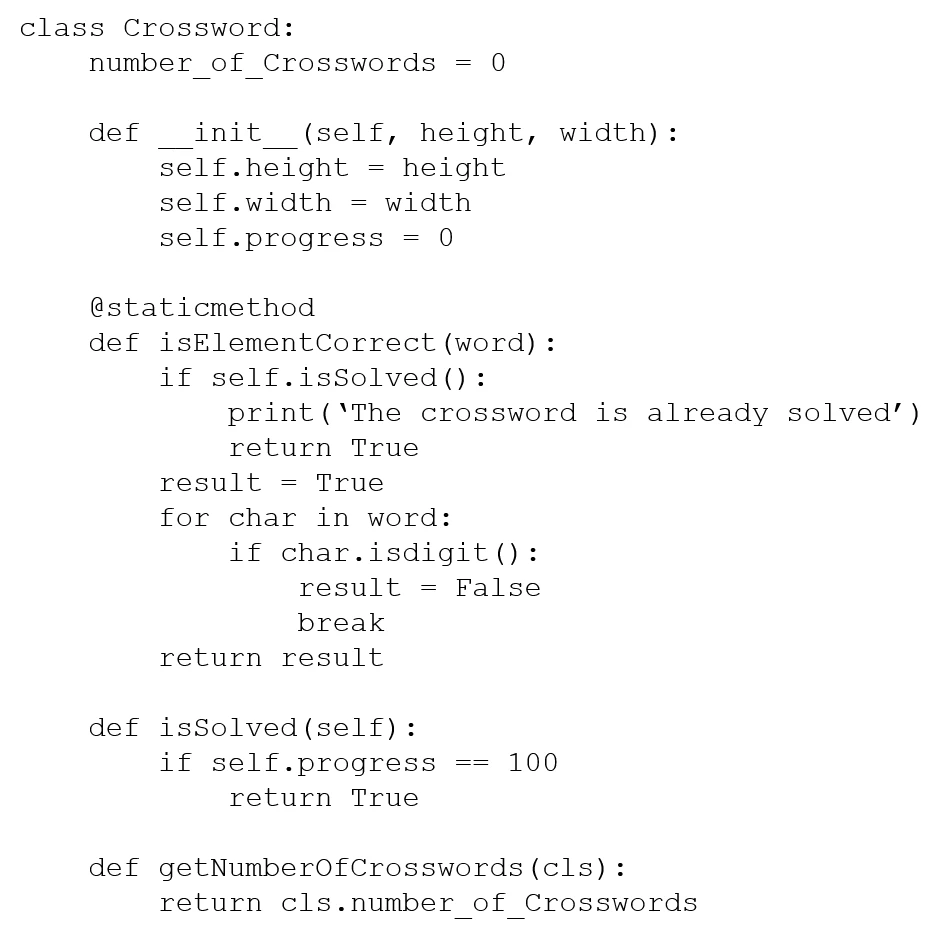
Analyze the following snippet and decide whether the code is correct and/or which method should be distinguished as a class method.
Exam PCPP-32-101: Question 7 - Image 1
Answer

Suggested Answer

The suggested answer is B, C.

The code is erroneous. The isElementCorrect method is incorrectly decorated as a @staticmethod while trying to access self, which is an instance variable. Static methods do not have access to self. Furthermore, the getNumberOfCrosswords method should be decorated with @classmethod to properly access class variables.

Community Votes2 votes
CMost voted
100%
Question 8 of 80

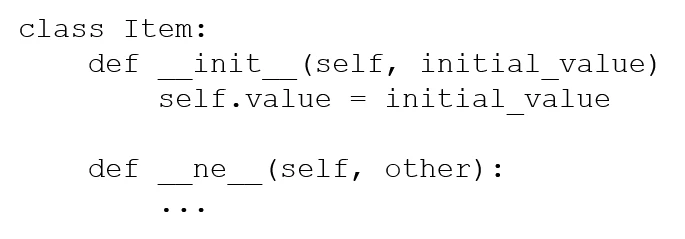
Analyze the code and choose the best statement that describes it.
Exam PCPP-32-101: Question 8 - Image 1
Answer

Suggested Answer

The suggested answer is D.

Community Votes

No votes yet

Join the discussion to cast yours

Question 9 of 80

Which function or operator should you use to obtain the answer True or False to the question "Do two variables refer to the same object?"
Answer

Suggested Answer

The suggested answer is D.

Community Votes

No votes yet

Join the discussion to cast yours

Question 10 of 80

Which sentence about the @property decorator is false?
Answer

Suggested Answer

The suggested answer is A.

The @property decorator should be defined before the methods that are responsible for setting and deleting an encapsulated attribute, not after. This is because the @property decorator creates a getter method, and the corresponding @property_name.setter and @property_name.deleter decorators rely on this getter method to function correctly. Therefore, it is crucial for the @property-decorated method to be declared first.

Community Votes5 votes
ASuggested
100%