After you answer a question in this section, you will NOT be able to return to it. As a result, these questions will not appear in the review screen.
You are a Dynamics 365 for Field Service system administrator.
You are configuring a new instance of Dynamics 365 for Field Service. The organization needs to automatically generate work orders based on agreements, and send invoices on a recurring basis by customer.
Solution: You implement the following configuration changes.
1) Create Agreement
2) Define Booking Setup
3) Set Booking Recurrence
4) Create Invoice Setup
5) Define Invoice Recurrence
Does this meet the goal?
You install Connected Field Service and set up Azure IoT Central, but it seems no alerts are being received in Dynamics 365 for the devices.
You need to find the issue and resolve it.
Which action should you choose?
You install and configure Connected Field Service with Azure IoT Central. Several of your connected devices sent alerts back to Dynamics 365 and work orders were created. However, the work orders were not sent back to Azure IoT Central.
You need to resolve the issue.
Which Action should you take to resolve the issue?
One of your Dynamics 365 customers wants to decrease the number of repair appointments by sending fewer technicians onsite.
You need to provide a recommendation of which solution your customer should use to achieve their request.
What should you recommend?
You are a field service administrator for your company.
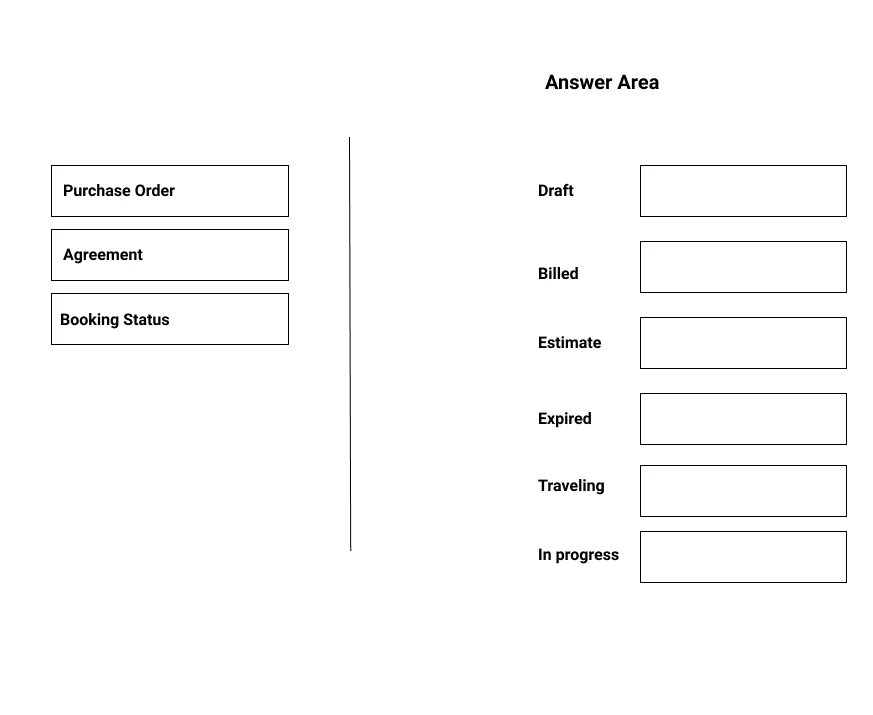
You review the Field Service administrator guide to understand how the status fields can support your company's business processes.
Which unique entity system status value matches with its Entity Type? To answer, drag the appropriate unique entity system status values to the appropriate
Entity Type. Each unique entity system status value may be used once, more than once, or not at all. You may need to drag the split bar between panes or scroll to view the content.
NOTE: Each correct selection is worth one point.
Select and Place: