Question 6 of 103

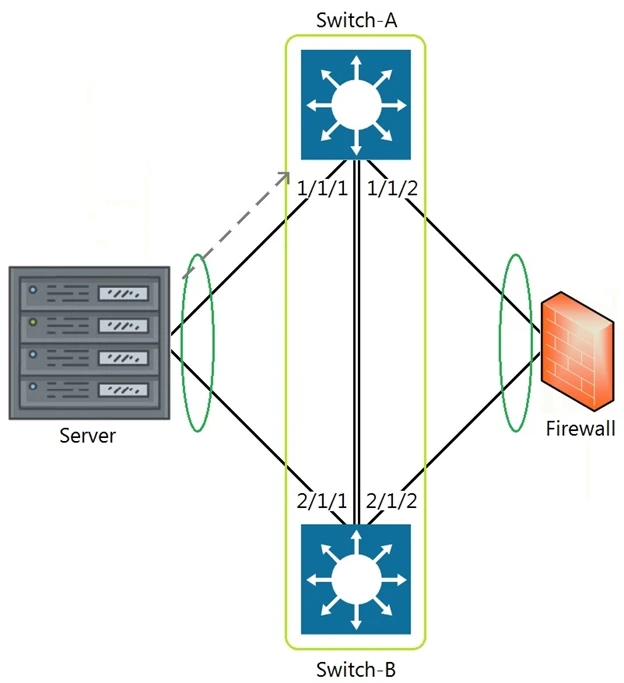
Refer to the exhibit.
Exam HPE6-A72: Question 6 - Image 1
What change on Core-1 will result in a successful ping to 10.1.1.254 from the management interface?
Answer

Suggested Answer

The suggested answer is A.

To ping a network from the management interface, which typically resides in its own Virtual Routing and Forwarding (VRF) instance, the VRF context must be specified in the command. Using the command 'ping 10.1.1.254 vrf mgmt' tells the system to send the ping from within the management VRF, allowing the network to be reachable. This accurately reflects the separation of the management plane from the data plane and where the routing table for the management interface resides.

Community Votes7 votes
ASuggested
100%
Question 7 of 103

ServiceOS login: admin -

SVOS> password -
Enter password: ********
Confirm password: ********
The login password to access an Aruba AOS-CX was lost. After connecting to the switch console port, a reboot is performed and the Service OS console is accessed as shown above.
What is the default password that is required for the admin account while under the Service OS console?
Answer

Suggested Answer

The suggested answer is A.

For the Aruba AOS-CX under the Service OS console, no default password is actually set for the admin account. This is because ServiceOS allows access without a pre-set password to enable administrators to easily reset and manage user access in case the login password is lost. Therefore, the correct answer is that no password is set for this account.

Community Votes20 votes
ASuggested
95%
C
5%
Question 8 of 103

Refer to the exhibit.
Exam HPE6-A72: Question 8 - Image 1
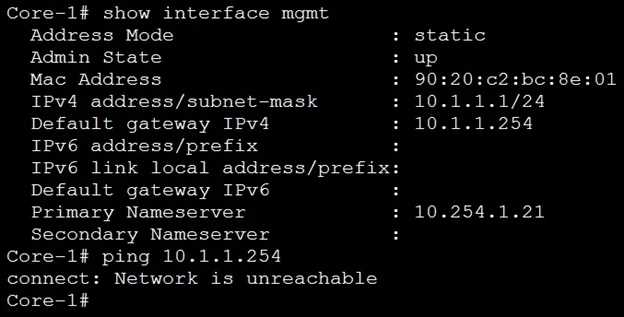
The Aruba 8400 in the exhibit is member 2 of a VSX stack.
Which command will enter the interface sub configuration mode for the port, indicated by the orange square?
Answer

Suggested Answer

The suggested answer is C.

In the context of configuring ports on an Aruba 8400 switch within a VSX stack, it is important to note the specific conventions used. For VSX configurations on Aruba 8400 switches, the interfaces are generally configured in the format of 1/X/Y, not considering the member of the stack as seen with different configurations like VSF. Therefore, the correct command to enter interface sub-configuration mode for the port indicated by the orange square is 'interface 1/4/15'. This aligns with the slot and port configuration format that applies uniformly regardless of the switch's stack member status in VSX settings.

Community Votes19 votes
AMost voted
53%
CSuggested
47%
Question 9 of 103

What are two features of the three-tier designs? (Choose two.)
Answer

Suggested Answer

The suggested answer is B, C.

The three-tier design typically includes a Core, Distribution, and Access layer. Adding a distribution layer distributes routing decisions more efficiently, freeing up resources in the Core which improves performance and routing throughput. Additionally, including a distribution layer enhances scalability by handling Layer 3 routing and access control, making it suitable for large deployments.
Community Votes

No votes yet

Join the discussion to cast yours

Question 10 of 103

Refer to the exhibit.
Exam HPE6-A72: Question 10 - Image 1
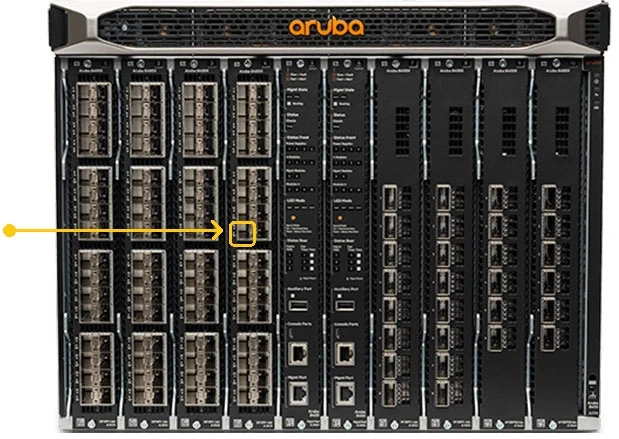
The above scenario shows a packet from the Server destined for the Firewall. Switch-A and Switch-B are bundled as VSF stack. The LAG between the VSF stack and the firewall indicates a hash function to forward the packet on port 2/1/2.
Which statement is true regarding how Switch-A will forward the packet?
Answer

Suggested Answer

The suggested answer is A.

Switch-A will forward the packet on port 1/1/2. In a VSF (Virtual Switching Framework) setup, the typical LAG (Link Aggregation Group) hash function is overridden, and the switch prefers to use its own local links instead of using the VSF links. This means that Switch-A will use its local link (port 1/1/2) to forward the packet rather than sending it to Switch-B for it to be forwarded on port 2/1/2.

Community Votes15 votes
ASuggested
93%
D
7%